

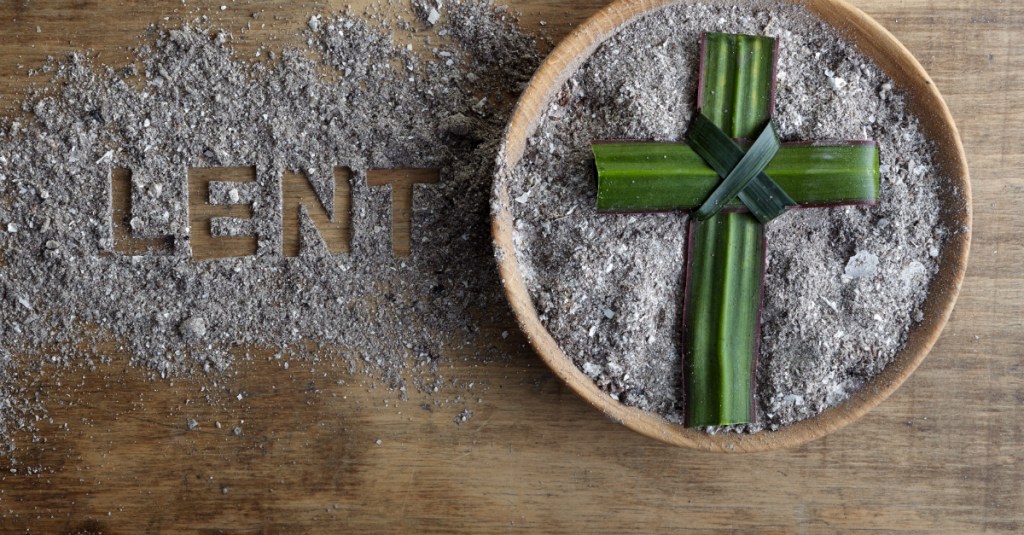
This week, I want to begin looking at what is known as “The Christian Year.” This will be the first in a series of posts that will discuss the different seasons of the Christian year as well as how to practice them. Also, just by way of a heads up, I will not be covering everything that pertains to each season in one single post. In fact, to help keep things simple for anyone who is being exposed to these topics for the first time, I am not planning on posting about Lent again until next year. I mean, this is a blog after all! I need to keep some handle on what I post or you all may wander off to other, better established bloggers who write in the area of theology, history, and Christian practice!
For this year, though, I hope to write simple introductions to the Christian Year, the seasons, and how they are observed and practiced. As the title of this post suggests, we’re going to be covering the season of Lent. This is a scary word for many Protestants, especially those in the typical Baptist world that I come from. Some see it as “too Catholic” because their only exposure is from Roman Catholic friends or Roman Catholic bashing from the pulpits of their local churches. Others see it as unnecessary because… well… the word “Lent” isn’t in the Bible. Personally, I’m more than willing to entertain the latter reason than the former – but, Southern Gospel music, 3-point sermons, and the current executive structure of church leadership found in many Baptist churches today isn’t in the Bible either. So, instead, let’s approach this with an open mind and consider just a few simple ideas today:
- First, let’s simply try to get our heads wrapped around the definition of Lent.
- Second, let’s see if we can find flavors of the Lenten Practice from the Scriptures.
- Third, let’s look at where one can begin to practice this season and make it part of their regular Christian life.
Sound Good? Let’s get started.
What is Lent?
The best place to usually start is at the beginning. So, let’s answer the question: What is Lent? The word Lent (as it relates to the Christian practice) simply means “Spring.” So, if for some reason the word “Lent” makes you uneasy, it is not inappropriate to call it the Spring Season.
The season of Lent developed early in Christian history as a way to fast before the feast of Easter. For the first two centuries, the church only observed a two-day fast beginning on Friday to commemorate the death of Christ on the Cross and Saturday to mark his entombment. The fast would then be broken on Resurrection (Easter) Sunday. During this early period, this was also more commonly practiced as a fast of mourning due to the weighty nature of the crucifixion and the death of God in the Flesh.
However, by the 3rd Century, the Lenten fast had been extended to the six days prior to Easter where bread and water were the only foods consumed for the first four days and then a full fast was observed on Good Friday and Holy Saturday. By the time of the Council of Nicaea in 325, the church was observing a full forty-day fast. The reason for the forty-day number here is simple: Forty is a number of testing in Scripture. During the forty-day Lenten fast, one is reminded of Christ’s forty-days in the wilderness being tempted by Satan (cf. Mt 4, Mark 1, Lk 4). Moses and the Exodus generation spent forty-years in the wilderness (Exodus – Deut.). Noah and his family spent forty days and nights on the arc (Gen 6-8). Elijah also spent forty-days in the wilderness as he fled from Jezebel (see 1 Kings 19).
As the centuries have continued to unfold, then Lenten season was also used as a time for new converts to prepare themselves for baptism – specifically on Easter Sunday. During the early centuries of the faith, due to hard and harsh persecution, new converts spent years (sometimes up to 3) being taught what they now claimed to believe (which is where we get the practice of catechism). After this period of teaching, they would fast for the forty-day season of Lent, and then be baptized and brought into the full fellowship of the Church (observing the Lord’s Supper and other practices). For the sake of sharing in the burden of the forty-day fast of Lent, many other Christians in the church would join the candidates for baptism in their fast as a sign of solidarity.
There is much more that we could discuss here, but this gives you the basics. Now, let’s consider a few Lenten practices.
Lenten Practices
Typically, there are three main practices of Lent: Fasting, Prayer / Repentance / Meditation, and Almsgiving. For the sake of space, let’s focus on them in general terms.
Fasting – First, and primarily, is the practice of Fasting. For Protestants (especially Baptists) this is a hard practice to wrap our minds around. Why? Because Baptists are known for “fellowship meals.” We like to eat! And, we like to eat in sinful excess. As I have mentioned, I have been pastoring in a small Baptist church in the rural south for three years now – there was more shock on the day I taught on Fasting than when I moved observing the Lord’s Supper up to six times a year instead of 4 (or never when I first showed up). Here’s why: We’re comfortable with praying, retreating, and giving… but fasting is not an American practice. It doesn’t fit in our “land of milk and honey” mindset that we’ve been taught growing up.
But, let’s ask the question: Is fasting Biblical? Yes! There are many places in Scripture where we could turn, but for the sake of space let’s just look at one command (not suggestion, command) from the Lord Jesus himself – Matthew 6:16:18. Jesus says here “And when you fast, do not look gloomy alike the hypocrites, for they disfigure their faces that their fasting may be seen by others. Truly, I say to you, they have received their reward. But when you fast, anoint your head and wash your face, that your fasting may not seen by others but by your Father who is in secret. And your Father who sees in secret will reward you.”
For those who have eyes to see, I’m sure you noticed the word “when” bolded twice in that section of Scripture. Like the section before it on prayer (where we get the Lord’s Prayer from), Jesus expects his disciples to fast. Not just the 12 inner circle and not just the 72 who were all in the upper room on the Day of Pentecost – but all of those who call on his name as Lord. Jesus expects his disciples to fast. If you’re not surprised that Christ expects his disciples to pray, why would it surprise you that he expects us to fast as well?
Prayer/Repentance/Meditation – Second, the practice of prayer or repentance or meditation. Yes, all of these are three separate things, but they easily go hand-in-hand. When fasting, it is important to remember why you’re fasting. During the Lenten Season, fasting and prayer go together like peanut butter and jelly. While fasting, we pray and grow closer to the Lord. While fasting, we repent (yes, even Christians need to constantly repent) in order to draw near to the Lord – especially as we draw closer to his Passion. While fasting, we meditate on Scripture, on what Christ himself has done for us on the cross, and we even mediate on his period of fasting in the wilderness.
I’ll post later on the practice of Christian meditation, but for the present it simply means filling your mind with Scripture (see Psalm 1), memorizing it, and thinking through it throughout your day.
Almsgiving – I honestly don’t have much on this one because there’s not a whole lot to say. The word itself means “giving to others.” During the Lenten Season, some add the practice of service and giving to their fasting. This can be a number of things: Serving in a soup kitchen, volunteering for food delivery, volunteering at a hospital or nursing home, asking your pastors/elders how you can better serve your local church during the time leading up to Easter.
This can also take on the practice of giving money as well as your time. Is there a financial need in your local church that you have the means to help meet? Is there someone in your community who is low income that is having a hard time making rent or buying groceries? You get the point.
Adding the practice of serving to your Fasting and Prayer adds a deeper and more spiritual level to the Lenten Season that will better prepare you to celebrate the resurrection of the Lord on Easter.
Where to Begin
Finally, let’s ask the question: Where can I begin to practice Lent? Obviously the section above offers some guidance, but let’s get a little specific.
Ash Wednesday – First, Lent begins on Ash Wednesday. This year (2021) Ash Wednesday is on Feb 17th. That is the day to begin your fast. Typically, this includes attending an Ash Wednesday service and having ashes imposed on your forehead (reminding your that you are from dust, and from dust you will return). If your local church does not observe the Christian year and you would like to attend an Ash Wednesday service, find your local Anglican, Roman Catholic, Eastern Orthodox parish and join them. Just because you’re Protestant doesn’t mean you won’t be welcome (Anglicans are Protestant btw). It also doesn’t mean that you have to participate in every element of the service – but, it will do you good to begin this way.
If you’d prefer to not participate in an Ash Wednesday service this first time around, that’s fine too. It’s not a requirement, but it does add to the incarnational nature of our faith. Just simply begin your fast on Ash Wednesday.
Fasting – My suggestion here is to go simple the first time you fast. If you’ve never full fasted, this isn’t something to do for the very first time. Mainly because you’ll give up! Typically, we are to fast from something that we can take up again with gladness at the end of the season. It’s during the fast, when you want that thing the most, that you’re reminded not only of your own mortality, but of the sufferings of Christ for you.
In the past, I have fasted from meat and social media. Others I know have fasted from things they really enjoy like coffee or sodas. These may seem simple and not very high and spiritual – but come Saturday after not having had coffee or meat for three days, you’ll begin to get into the spirit of Lent.
Two important points to note here:
- First, if you have health/dietary issues… don’t neglect your health in that way. The point of the Lenten fast is to help you identify with the sufferings of Christ and to meditate on that sacrifice – not kill yourself. Do something that will not cause you fatal bodily harm. Christ has already died for you – if you’re to be martyred, let it be because you are boldly proclaiming the Gospel, not because you’re a diabetic and neglected to eat.
- Second, there are two ways to observe the Lenten Fast. Because every Sunday is the Lord’s Day, you may abstain from your fast on Sundays. Taking the Sundays out between Ash Wednesday and Easter Sunday totals up to 40 days. So, if you’d like to “fast from your fast” on Sundays, this is permissible. If you’re fasting from meat… go easy on Sundays, trust me. The other way is to simply keep your fast from Ash Wednesday to Easter Sunday. We’re not pharisaical about this. The point is to grow closer to Jesus during this time.
Worship – Most importantly, go to worship during Lent. Not only are we to “stir up one another for love and good works” (Hebrews 10:25), but meeting together for worship on the Lord’s Day is a great way to be held accountable and encouraged during the Lenten Season. We need one another, especially during Lent and even more so this year during a long COVID19 pandemic.
Other Practices – The other practices I have already listed above. Make use of them if you’d like. If this is your first Lent, my suggestion is to go easy so that you stick with it. Less is more in this case. If you feel the Spirit pulling you in one direction or another, follow his leading. Maybe fast this year and do one or two acts of service along with your prayer and meditation. Go volunteer at a soup kitchen or help your pastor prepare for Easter. Trust me, small church pastors will be happy to accept the help in something that may seem easy and simple (fold bulletins, prepare the music, clean the church, etc…).
Are you planning on observing Lent this year? How so?
Does the idea of Lent bother you? Why?
Let’s have a conversation and grow in Christ together!
“And when you fast, do not look gloomy alike the hypocrites, for they disfigure their faces that their fasting may be seen by others. Truly, I say to you, they have received their reward. But when you fast, anoint your head and wash your face, that your fasting may not seen by others but by your Father who is in secret. And your Father who sees in secret will reward you.”
Matthew 6:16-18, ESV

 The SouthTown Pastor
2 thoughts on “The Christian Year: Lent”