

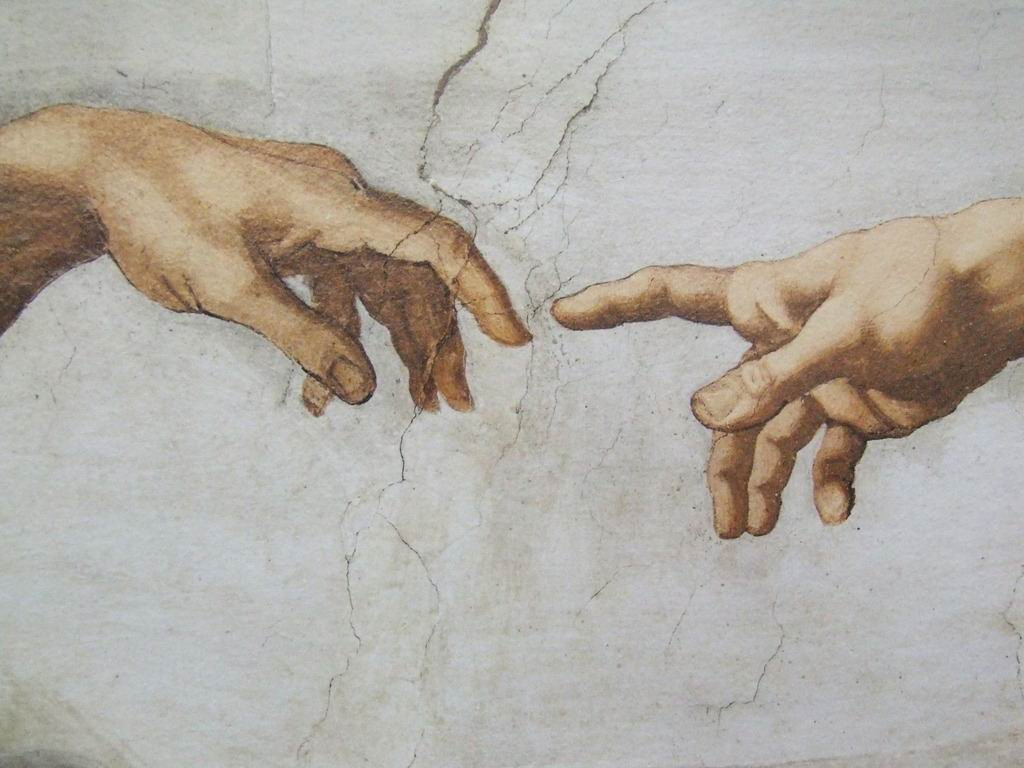
Greetings and Salutations all! It has been a while since we began to dig deep into this particular theological discussion, but considering more recent current events, I thought it might be beneficial to focus our attention back on what really matters – God, the Gospel, and our place in God’s creation. In this case, our place in relation to being created in Imago Dei.
In our first discussion on the Imago Dei (Image of God), we discussed the importance of seeing one another as image bearers of the Godhead. We noted how this is a vital concept to grasp in our age of unrest and disregard for others as human beings. Whether this occurs on a physical interaction level (such as police brutality, sexual abuse, oppression by a government entity, racism, etc…) or on a virtual interaction level (such as social media), I think we can all agree that there is a lack of respect for our fellow man that seems to have exploded out of proportion over the last few decades (or it is simply more apparent due to the cancer of social media).
As we walked through that initial post, we made note of where this doctrine (teaching) has originated in Christian theology, specifically in Genesis 1:26-27. While we somewhat dealt with our topic for this week in that first post, I thought we might spend a little time digging into it a little further. So, let’s ask the question: If humanity is made in Imago Dei, how exactly do we image God? More specifically, since we established that biblical Christians understand God as Trinity (Father-Son-Spirit/Three in One, One in Three), how does humanity image the Triune Godhead?
This is a fascinating discussion, and one that I’m excited to talk about. Disclaimer: we most likely won’t be able to discuss this topic exhaustively in a single blog post. So, if there is something that I fail to mention here, bring it up in the comments and we can discuss it in later posts.
One final point before we dig in, this is just the first of six posts that I’m planning to make on this idea of the Imago Dei. Therefore, if we need to dig deeper into one of them, we have plenty of space with which to do so in the future!
Imaging the Trinity
I feel as though the best way to tackle this topic is to look at it in 5 particular areas that I will outline below. They will all be rooted in Scripture, as all good Christian theology should be. So, let’s begin!
Back to Gen 1:26-27
Let’s first make our way back to the beginning of the Bible and consider the text from which this whole discussion begins to take place – Genesis 1:26-27. In the Creation account, God has completed all of his creation minus one – humanity. As we mentioned in the last post, it is not self-centered to note that humanity is the pinnacle of God’s creation. This is not because all of creation isn’t awe-inspiring (it is!). Rather, it is because there is nothing else in which God has made that has been made in God’s image… except humanity. Again, note God’s own conversation among the Triune Godhead in the creation of humanity:
Then God said, “Let us make man in our image, after our likeness. And let them have dominion over the fish of the sea and over the birds of the heavens and over the livestock and over all the earth and over every creeping thing that creeps on the earth.”
So God created man in his own image,
in the image of God he created him;
male and female he created them.
Moving forward through our next four points, this is a key issue to establish – all of humanity has been made in God’s image. Because of this, as we seek to understand how we “image” the Triune Godhead, it is from this perspective of being made in Imago Dei that we need to have a firm grasp on. If you don’t, take a moment and go back and read the first post on this topic before moving forward. It’ll be helpful, I promise.
In creation
Alright, so, now that we have our starting point, let’s consider how we image the Trinity. The first way is in creation itself. No, we do not and cannot create ex nihilo (out of nothing) as God does – however, in creating we are mirror imaging the Godhead. Let me attempt to explain without sounding heretical.
Humanity was created to create. We were created to procreate (which we will talk about next) and to work (which we will also talk about below). But, when we write, we create. When we imagine, we create. When we invent, we create. When we envision, we create. Humanity was created to create.
This is not in anyway an attempt to usurp God or his influence or authority in our lives. Rather, when we create, invent, envision, we are simply acting as an image of our creator. Where we go wrong in our creating is by not giving proper glory or honor to the one in whom we are imaging. When we glory in the creation itself, whether that is in the creation that God has made or the creation that we have made, is where we stray into false worship (See Romans 1:18-ff).
The point here is this – when we look at a beautiful painting, a carving or woodworking project, listen to a soul moving piece of music, watch a film, write a story, we are simply looking upon the mimicking of the creative nature of God who is Himself the ultimate Creator. We “Image” the Trinity by creating.
In Procreation
The second way in which we “Image” the Trinity is by procreating. I’m going to assume that we are all mature adults at this point, so take my meaning here literally.
Where do we see this in Scripture? In Genesis 1 of course! Just one verse after noting that God would create us in his image, he gives us our mandate, our commission, our charge. He says: “Be fruitful and multiply and fill the earth and subdue it, and have dominion over the fish of the sea and over the birds of the heavens and over every living thing that moves on the earth.” (Gen 1:28)
Be fruitful. Multiply. Fill the earth. If humanity is good at anything, it’s at multiplying. We are currently sitting at around 7.6 BILLION people on planet earth. Billion.
Yes, all of creation naturally procreates. But humanity procreates for the purpose of subduing and having dominion (authority) over the earth, as we have been commanded. In procreating, we image the Godhead because the Godhead has made us.
In procreating, we “image” the Trinity because we have “made” another “in our image.”
In Work
The third way in which we “image” the Trinity is by working. This one comes as a no-brainer for any seasoned Christian. But, just in case there is any confusion, let’s turn again to Scripture.
First, in Genesis 1:28, God says, “Be fruitful and multiply and fill the earth and subdue it, and have dominion over the fish of the sea and over the birds of the heavens and over every living thing that moves on the earth.“
“Subdue” the Earth. Have “dominion” over the Earth. These are charges to work. To work the earth for the glory of God. To work the earth and to bring it into proper rule and authority. This is why we build homes, dam up rivers, and plant gardens. This is why we raise livestock, domesticate animals, and protect endangered animals. This is why we try to be aware of and prevent pollution and misuse of natural resources. Because God has called us to properly work the earth for our benefit. We’ll dig more into a proper theology of this dominion in a later post in this “series,” but for now we can easily see that we are called to work as we “image” the Trinity.
A second place in Scripture that helps us to see this work mandate is in Exodus 20:8-11 in 4th of the 10 Commandments. God states: “Remember the Sabbath day, to keep it holy. Six days you shall labor, and do all your work, but the seventh day is a Sabbath to the Lord your God. On it you shall not do any work, you, or your son, or your daughter, your male servant, or your female servant, or your livestock, or the sojourner who is within your gates. For in six days the Lord made heaven and earth, the sea, and all that is in them, and rested on the seventh day. Therefore the Lord blessed the Sabbath day and made it holy.”
Yes, this is a commandment to remember to Sabbath, to Rest (did you know that in Resting we Image God?!?! For in six days the Lord made heaven and earth, the sea, and all that is in them, and rested on the seventh day.). But this commandment is also a commandment to work. We are to work and we are to rest. Just as God has worked in creation and procreation, we are to work and we are to rest.
We “image” the Trinity by Working… and by Resting.
In the Family
Finally for this week, let’s build off of these other points and bring up how we “Image” the Trinity in the Family. I’m still reading and grasping this idea myself, so bear with me as I work through this and continue to grow in my understanding.
Again, there are two places in Scripture where I think we can see this most clearly. First is, again, in Genesis 1 & 2 and the creation accounts. We are made in God’s image and in His likeness. We’ve looked at what this means somewhat in the last post and so far in this post – but how does this relate to the family?
This may seem like a stretch, but…
- We know that God is Three in One/One in Three…
- When a husband and wife come together in marriage they are “one flesh” (Gen 2:24, cf. Matthew 19:4-6)…
- When a husband and wife come together in the marriage covenant and procreate, a child is born in their “image”…
My conclusion – the Family is in many ways an Image, an Icon, of the Trinity.
Pause here for a moment if you need to to take that in. I don’t think this is heretical or elevating humanity above its station. I think this is an intentional creative design by God for the purpose of showing his glory.
Consider Paul’s comments in Ephesians 5:22-6:4 to wives, husbands, and children. Just as Christ himself is submissive to the Father (See John 6:38, Luke 2:41-52, John 17) the wife and children are submissive to the husband/father (in a right and biblical way. We’ll discuss “submission” in more detail later). Just as the Father loves, cares, and provides for the Son, the husband/father, loves and cares for the wife and children (Ephesians 5:25-33). Just as the Spirit proceeds from the Father and the Son (John 14:16, cf. The Nicene Creed) children “proceed” from the father and mother.
There’s a lot to unpack with this, but again, I don’t think that this is inappropriate or heretical. Disclaimer here: Though I am a Protestant and a Baptist, Pope Saint John Paul II wrote a book on this that I skimmed more than a decade ago and plan to reread called “Theology of the Body.” While we Protestants may not agree with much or everything that our RCC friends do, this is an area that I think we should give more attention to. If you’re aware of any authors in the Protestant world who has, post it in the comments.
As always, this is but the beginning of this discussion. But, what are your thoughts? How can we take this even further? Where do we need to go?


I agree and it is a very appropriate connection. God made and ordained many things to (in part) point to higher truths; the family and marriage as in your connection to the Trinity is a great example. In fact I believe far more of life and creation is about this more than we often realize.
LikeLiked by 1 person